We All Know Who Owns That Color!
In which a certain shade sends society into paroxysms of ownership.
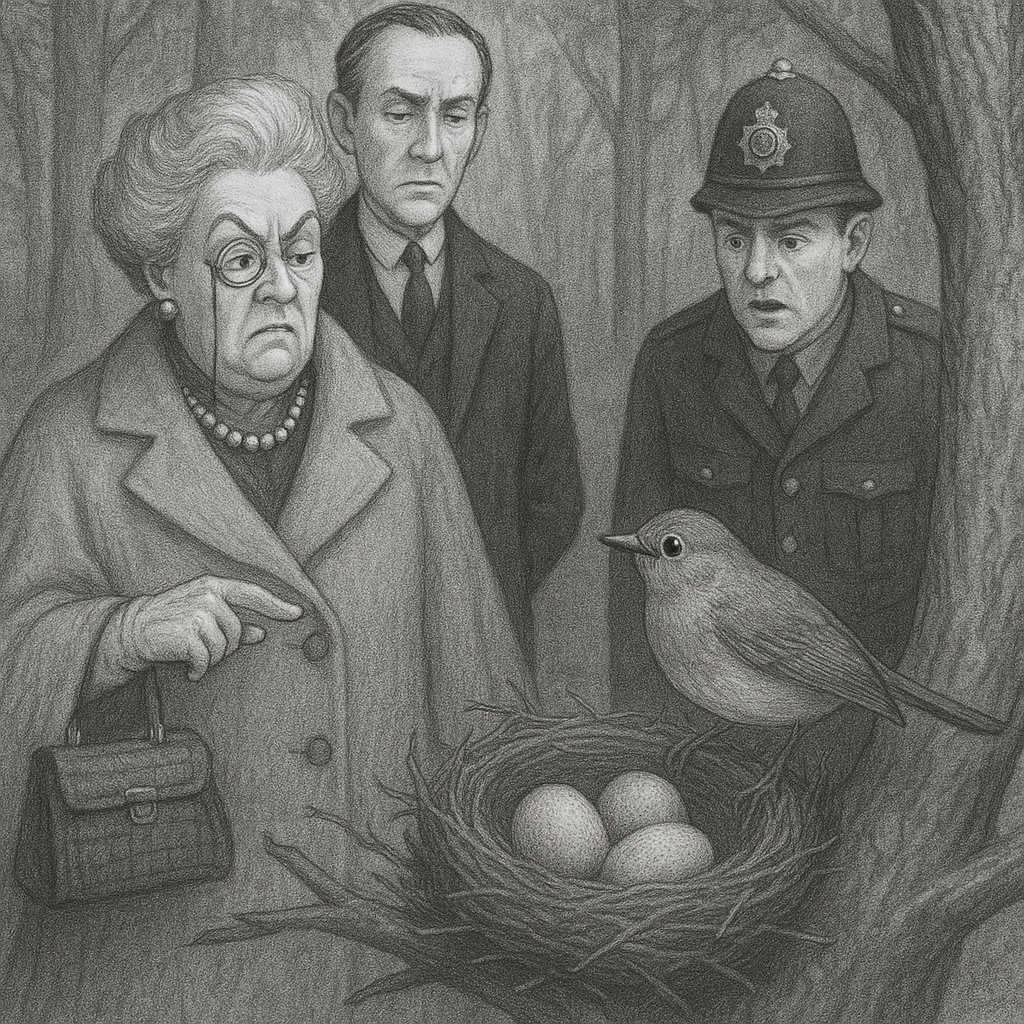
In the estate of Fairling Downs, just beyond the hedgerows of genteel society, lived a woman whose wealth had lifted her so far above reason that she no longer breathed oxygen but entitlement.
Her name? Mrs. Elsinore Bleachley—heiress, snob, and self-declared curator of exquisite taste.
One serene spring morning, while surveying her private gardens (more for ownership than admiration), Elsinore stopped dead beneath a budding dogwood tree. Her gaze fixed on a humble nest perched among the branches.
Inside were three perfect eggs, each glistening with the unmistakable sheen of that color.
Not just any color. No. A color so specific, so fiercely recognizable, that it had ceased to be a mere pigment and ascended to the level of cultural shorthand. The kind of color people whisper about in boutiques and pass down with velvet boxes and generational wealth.
Elsinore’s breath caught in her throat like a pearl too large to swallow.
“Reginald,” she gasped, motioning to her butler with trembling, manicured fingers, “fetch the constable. We've been compromised.”
“Compromised, madam?”
She pointed at the nest as if it were a crime scene—and in her mind, it most certainly was. “Those... things. Look at them. Sitting there in that color. The nerve!”
Reginald, who had served in wars, hurricanes, and four seasons of amateur theatre, peered into the nest and blinked.
“Eggs, madam.”
“Not just eggs!” she hissed. “How can you not see it? They’ve replicated the precise tone, the exact saturation, the je ne sais quoi of that… house of sparkle and inheritance. I do not need to say the name. When one sees it—one knows.”
Reginald remained expressionless, a skill he had honed through long exposure to absurdity.
“They’ve stolen it,” she continued, scandalized. “The birds. Or perhaps the birds work for them. Are they subcontracting wildlife now? Have we come to this?”
The authorities were called, arriving with the polite confusion that only British constables can muster. Elsinore recounted the crime: a clear case of intellectual property theft—nature infringing on luxury.
“It’s not coincidence,” she said, pointing again at the nest. “When that color appears, one expects certification. A ribbon. A box. An invoice delivered by a gloved hand.”
“But madam,” the young constable ventured, “they’re… robins.”
“And that excuses the forgery?”
The officers wisely chose not to arrest the birds. Instead, they recorded the incident as a “domestic misunderstanding involving avian hues,” and gently suggested that Mrs. Bleachley might refrain from inspecting trees without legal counsel.
Word of the event spread like champagne spilled at a silent auction. The papers called her The color Constable, and the poshest circles debated the matter with great amusement.
Soon, Fairling Downs had a new sign posted beneath the infamous tree:
“WARNING: Any Egg Matching a Certain Aesthetic Will Be Prosecuted to the Fullest Extent of Imagination.”
As for the eggs—they hatched. The chicks flew. And Elsinore remains vigilant to this day, scanning the skies for unauthorized branding violations in feathers and shell.
“We All Know Who Owns That Color!” was written by Dr. Elias Hartwell - Time traveler safeguarding history and folklore. and Steven M. Tilley.